What Is the Official Standard of a Dog Breed?
When we hear about a “breed standard,” many people imagine a technical document filled with highly specialized terms. But in reality, a breed standard is simply a detailed description of how a dog of a particular breed should look and be.
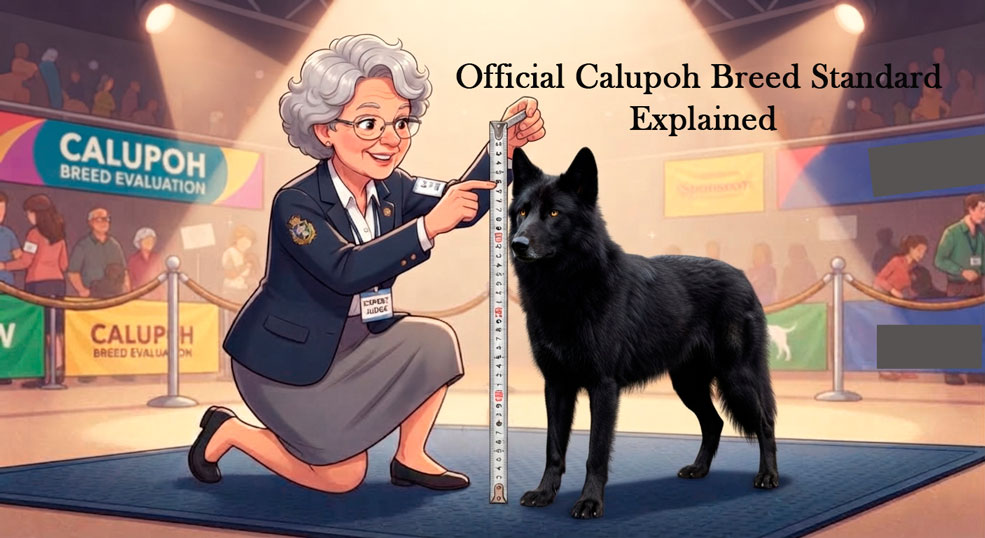
This document explains the breed’s appearance, temperament, and the characteristics that make it unique. In the case of the Calupoh, this standard helps preserve the breed’s identity and provides breeders, judges, and enthusiasts with guidance on how a Calupoh should look and behave.
In this article, we explain the official Calupoh breed standard in clear terms, so you can understand what each section means and what makes this Mexican breed unique.
Let’s get started!
Official Name
Calupoh (also known as Mexican Wolf-Dog).
A short name was chosen to make it easy to remember. The name comes from Canis lupus (wolf), Canis lupus familiaris (dog), and the h as a tribute to the Hank surname.
Origin
Mexico
Mexico was where the process of recovering ancestral pre-Hispanic breeding techniques took place, along with the symbolic and cultural recovery of the Mesoamerican wolf-dog.
Although dogs of Mexican origin were not used, since the original breeds used during pre-Hispanic times became extinct. Their symbolism and cultural legacy associated with the wolf-dogs of Mesoamerica were recovered, giving rise to the Calupoh as a modern representation of that tradition.
Breed Group
The Calupoh belongs to Group 1: Sheepdogs and Cattledogs.
The Fédération Cynologique Internationale (FCI) classifies purebred dogs into 10 functional groups, based on their original function, morphology (such as size, coat type, and structure), or genetic and working characteristics (such as tracking, guarding, sled pulling, or being exclusively companion dogs).
This structure organizes breeds in order to fairly evaluate their abilities, maintain consistent breeding standards worldwide, and highlight specific skills such as herding, hunting, or guarding.
Group 1: Sheepdogs and Cattledogs
This group includes breeds that have traditionally been used to guide, protect, or work with livestock. Dogs in this group tend to share several characteristics, including:
- High energy and endurance: They are active dogs that need exercise and mental stimulation.
- High intelligence: They learn commands and routines easily, which makes them highly trainable.
- Loyalty to their family: They develop a strong bond with their owners and tend to be very protective.
In the case of the Calupoh, the standard describes it as:
“A versatile dog and great companion that, due to its tolerance and nobility, can adapt to different activities, being especially suited as a companion dog.”
In everyday life, this can translate into a dog capable of accompanying its family on activities such as hiking, long walks, training, play, exploring new places, or outdoor activities, provided these are appropriate for its age, physical condition, and individual needs.
General Appearance
The standard describes it as:
“A strong and agile dog of notable size that resembles a North American wolf, with males being noticeably more masculine, slightly taller than long, yet very well balanced and evocative of the wolf in nature.”
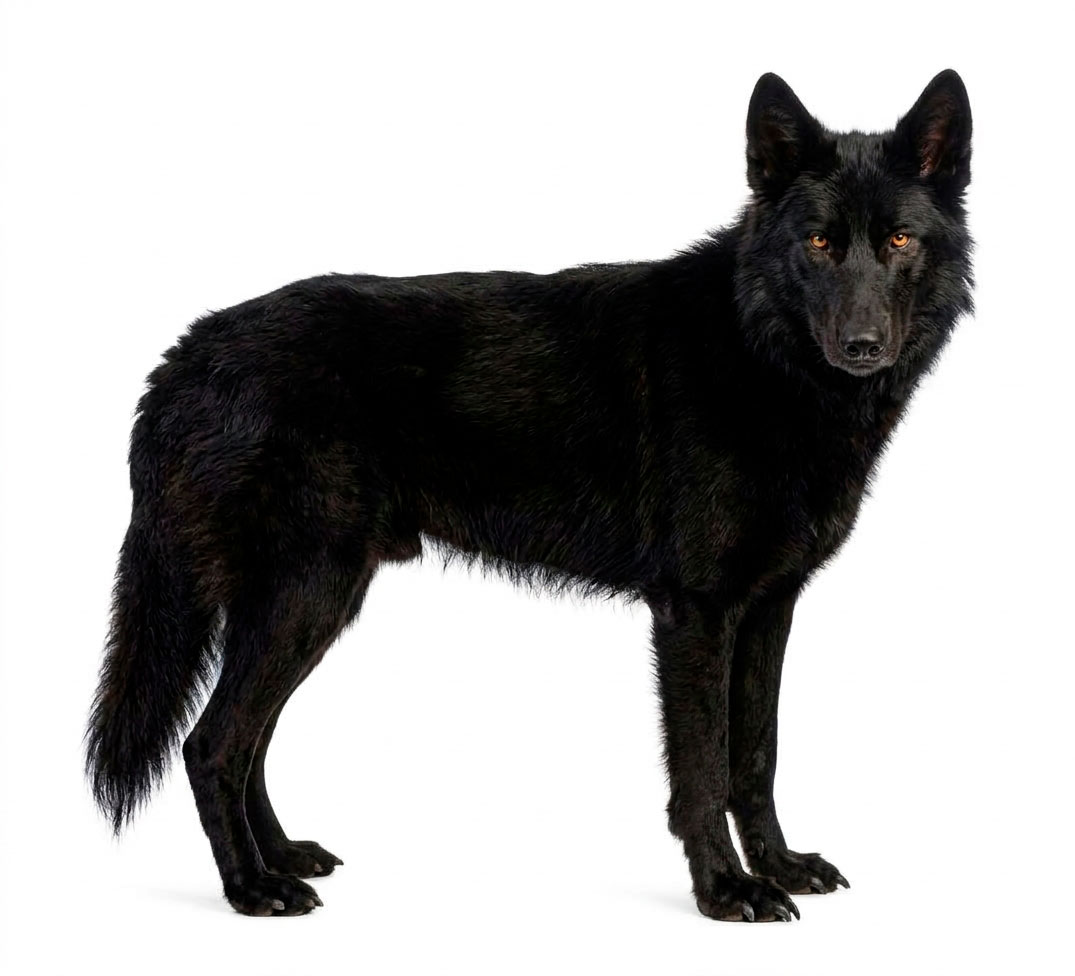
EThis physical difference between males and females is known as sexual dimorphism.
Important Proportions – Calupoh Structure
When the standard refers to proportions, it means how the different parts of the body are balanced.
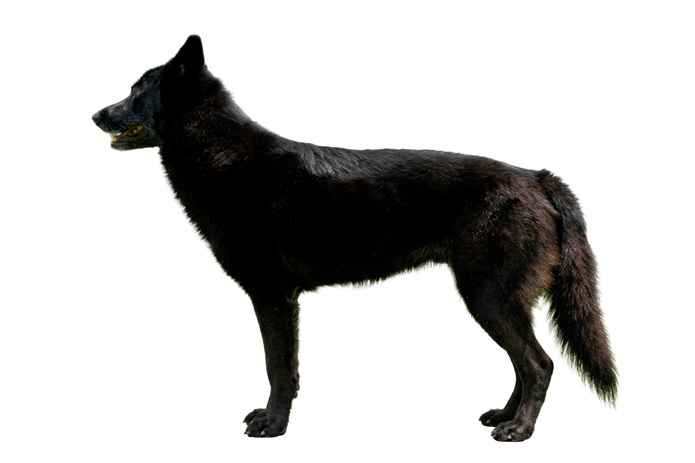
The Calupoh is a dog with a balanced and athletic structure, whose appearance is intended to resemble that of a wolf. Its body is slightly leggy, meaning its legs are relatively long in proportion to its body, contributing to an agile and light silhouette.
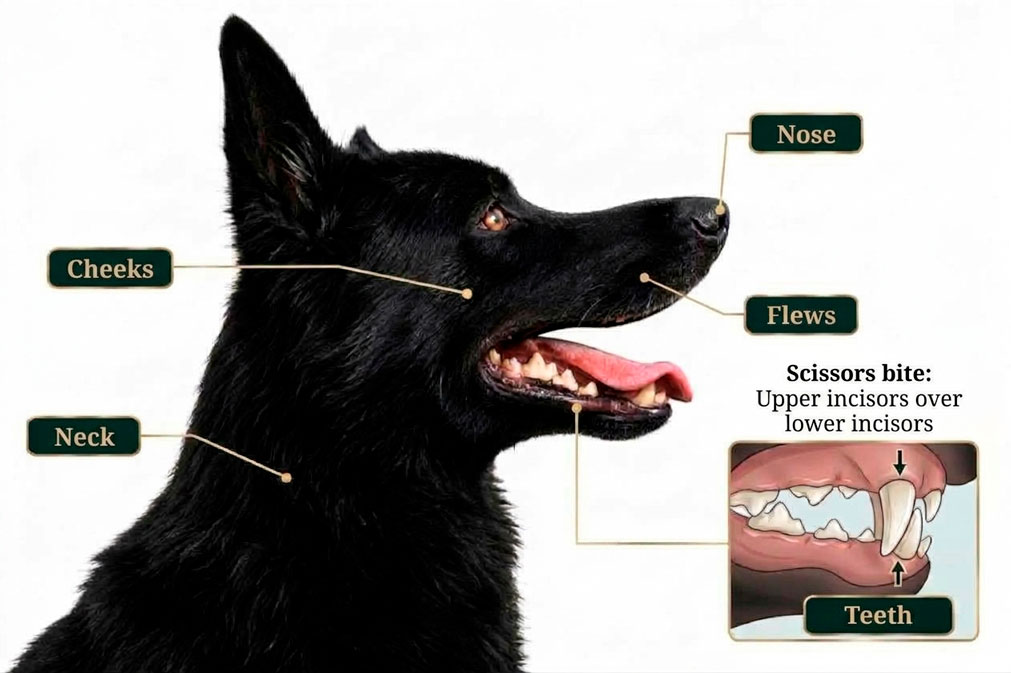
Its head is powerful and has a lupoid structure, a term used to describe a head with wolf-like characteristics. The neck is strong and, as the dog reaches maturity, may develop an abundant amount of hair around this area, forming a characteristic mane that accentuates its wolf-like appearance.
The chest has marked depth: when viewed from the side, the thorax descends considerably toward the lower part of the body. According to the standard, the chest also tends to become broader as the dog reaches maturity, especially after three years of age.
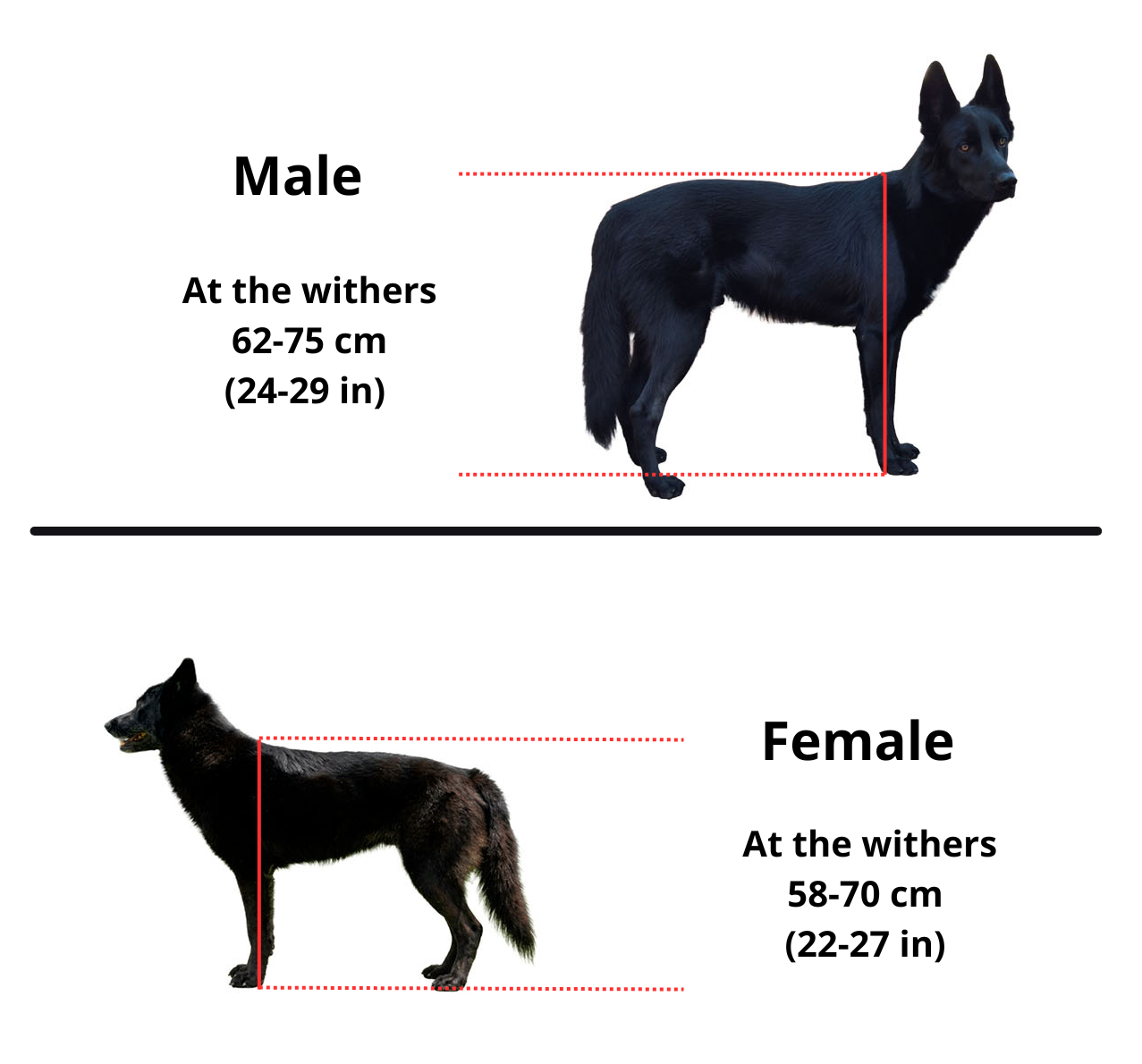
In terms of size, height is measured at the withers, the highest point of the back, located approximately where the neck and shoulders meet. The males reach 62–75 cm (24–29 in) at the withers, while females range from 58–70 cm (22–27 in) at the withers.
Behavior and Temperament
The official standard states that the Calupoh is:
“The Calupoh is a very agile and dynamic dog, yet very stable and easy to handle. It adapts to all kinds of activities, is loyal and noble with its family, gets along easily with other dogs, and is always willing to please its owner, although it may be reserved around strangers.”
The standard describes the Calupoh as agile, dynamic, and stable, capable of adapting to different types of activities. It is an energetic dog with good physical ability, so it may enjoy activities involving movement, exploration, and time with its family.
Within the family environment, it is characterized as loyal and noble, and it tends to form a close bond with the people it lives with. The standard also states that it can get along easily with other dogs and has a favorable disposition toward working and cooperating with its handler.
Around unfamiliar people, it may be reserved. This should not necessarily be interpreted as aggression: a reserved dog may simply prefer to observe and assess a situation before approaching or allowing physical contact. How each Calupoh responds to strangers can vary from one individual to another and is influenced by genetics, socialization, training, and life experiences.
For these reasons, early socialization and education based on positive experiences are important in helping a dog develop confidence and learn how to behave appropriately in different environments.
As with any dog, each individual’s temperament is also influenced by genetics, socialization, training, and experiences throughout its life.
Facial Region
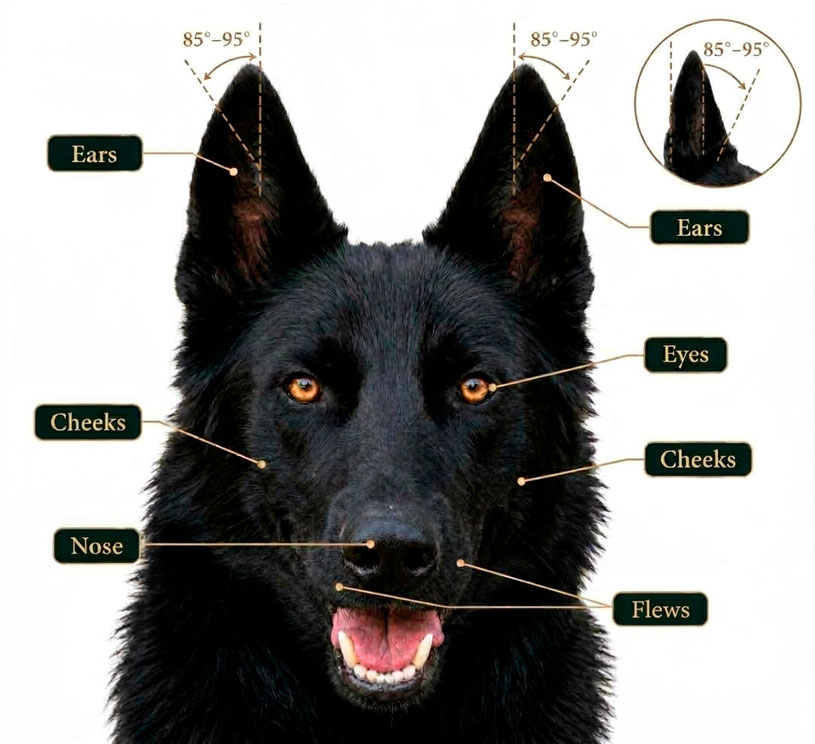
The facial region includes the muzzle, jaw, lips, eyes, and nose.
The Calupoh’s facial region should maintain proper proportions with the skull and develop a robust appearance, particularly as the dog reaches adulthood.
Nose
The nose, or nasal leather, is the external part of the nose and should be black and well pigmented.
Lips
The lips, particularly the upper lip, should be dark and well pigmented.
Dentition
The Calupoh should have a complete set of teeth, with white, strong, and firmly set teeth.
It should have a “scissor bite”, in which the upper teeth slightly overlap the lower teeth.
A “level bite” is also accepted, in which the upper and lower teeth meet evenly.
Cheeks
The cheeks are well defined, and as the dog matures, the hair in this area may visually blend with the abundant hair that develops around the neck. This contributes to the appearance of a particularly strong head and neck.
Eyes
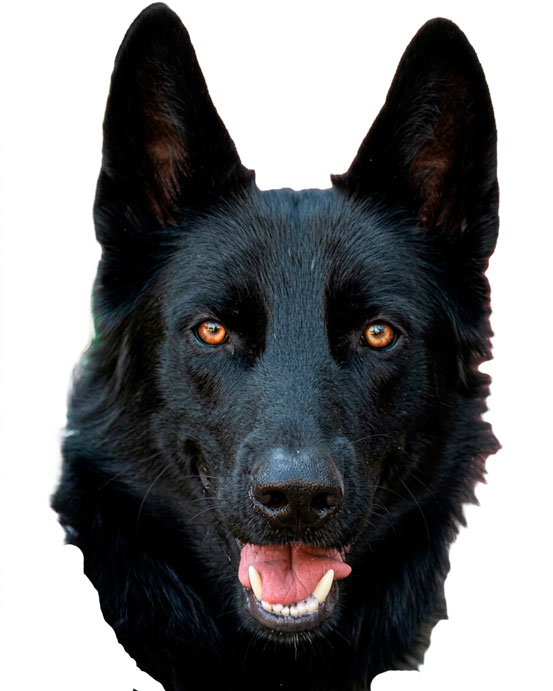
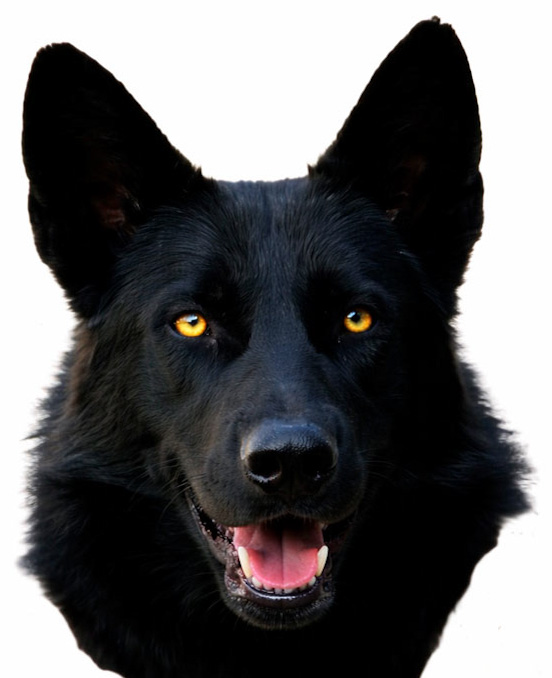
The eyes are one of the features that contribute most to the Calupoh’s expression. They are described as almond-shaped, expressive, and preferably light-colored, in shades of yellow, characteristics that reinforce its wolf-like appearance. Dark eyes may also occur due to the influence of the domestic dog present in the breed’s genetic foundation.
Amber eyes color
Yellow eyes color
Head
The head is one of the features that contributes most to the Calupoh’s wolf-like appearance.
It is described as a lupoid head, meaning a head with a shape similar to that of wolves. The standard establishes that the skull and muzzle are proportionate in length, so neither part should appear disproportionately long or short compared with the other.
One of its characteristics is a well-defined nasofrontal depression, also known as the stop. This is the change in direction between the forehead and the beginning of the muzzle. In simple terms, it is the area where the forehead slopes down toward the bridge of the nose.
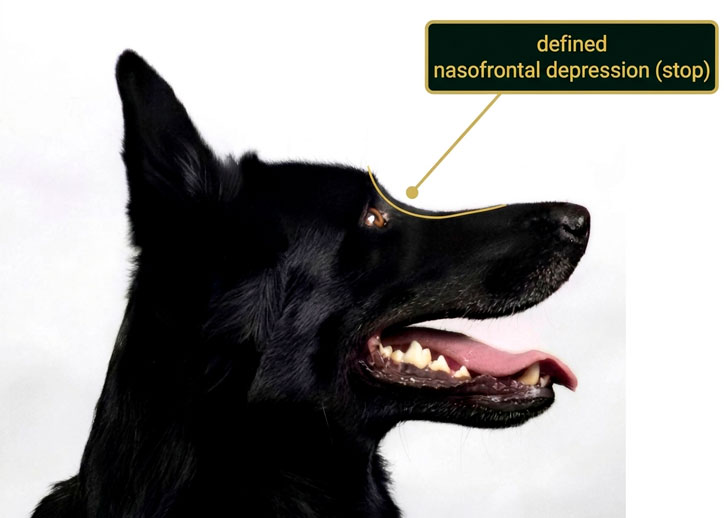
En los perros jóvenes, la cabeza puede parecer más estrecha y alargada. Conforme el perro crece y alcanza la madurez, el cráneo se desarrolla y adquiere una apariencia notablemente más ancha que la zona del hocico.
Ears
Another distinctive feature is its always-erect ears. They are triangular, large, and thick like those of a wolf, forming an angle of 85 to 95 degrees, measured in relation to the midline of the eyes, similar to the way a wolf’s ears are positioned.
Neck
The neck is strong and well formed, with a high set that creates a smooth transition from the back of the head to the back.
Una característica particularmente llamativa aparece con la madurez: alrededor del cuello puede desarrollarse una abundante cantidad de pelo que forma una melena semejante a la del lobo. Esta melena enmarca la cabeza y el cuello y contribuye a darle al Calupoh adulto una apariencia elegante y poderosa.
Body
The Calupoh’s body combines elegance, dynamism, strength, and balance. Its structure should allow it to move agilely and perform different movements without losing stability.
La línea superior, es decir, la línea que recorre la parte superior del cuerpo desde el cuello hacia la grupa, debe verse uniforme y armoniosa tanto cuando el perro se encuentra en movimiento como cuando permanece atento. No debería presThe topline, meaning the line running along the upper part of the body from the neck toward the croup, should appear smooth and harmonious both when the dog is moving and when it is alert. There should not be any abrupt changes or “breaks” between the different regions that make up the back.
The withers, located where the neck and shoulders meet, should be the highest point of the back. From there, the topline continues toward a strong and slightly rounded croup, where the tail is set. In its usual position, the tail may be carried below the topline.
When the dog is alert or displays a dominant attitude, it may raise its tail above the topline. However, the tail should not curl over the back.
Forelimbs (Front Legs)
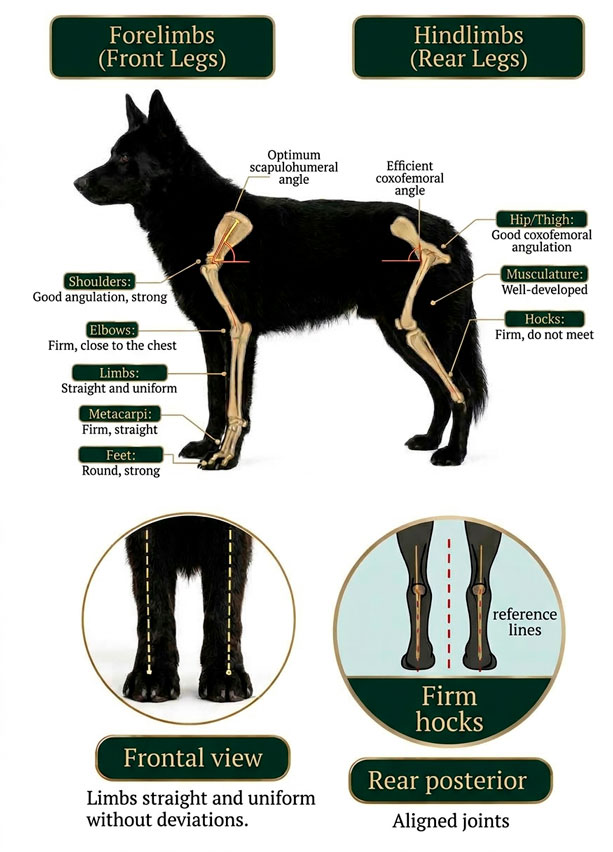
Las extremidades delanteras deben proporcionar tanto estabilidad como libertad de movimiento. Los hombros son fuertes y presentan una buena angulación, lo que permite un paso amplio y fluido y, al mismo tiempo, proporciona el soporte necesario para las maniobras de un perro ágil.
The elbows should be firm and remain close to the thorax. The limbs should appear straight and even, without deviations, while the metacarpals—the section between the lower part of the limb and the foot—should be firm and straight.
The feet are round and strong, suitable for supporting the movement of a dog with this type of structure.
When the entire limb is viewed from the front, it should appear straight and even, without the limb appearing weak or deviated.
Hind Limbs (Back Legs)
The hind limbs provide much of the power that drives the Calupoh during movement. The standard indicates good coxofemoral angulation, meaning an appropriate relationship between the structures of the hip and thigh that promotes firm and efficient movement.
These limbs should have well-developed musculature capable of allowing broad movements, such as those required for jumping, as well as maintaining a prolonged trot.
When observing the dog in motion, the hind legs should work in a coordinated and efficient manner. The hocks, which are the joints located on the rear of the hind limbs, should not move inward until they come together. Movement should demonstrate stability, coordination, and proper use of the strength of the limbs.
Movement
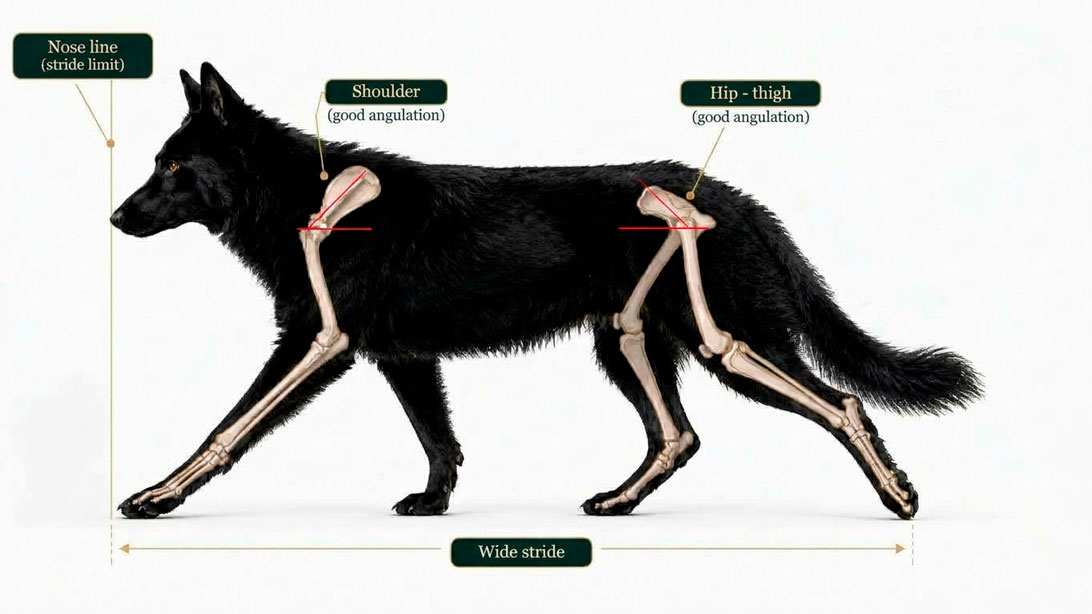
The Calupoh’s structure is also reflected in the way it moves. Its movement should be elegant and fluid, while also conveying the strength and solidity characteristic of a primitive-type dog. Its stride should be broad, allowing it to cover considerable distances without exaggerated movements or extending its limbs beyond what is natural.
During movement, the forelimbs should advance appropriately, without the tip of the foot crossing an imaginary line perpendicular to the nose. At the same time, the hind limbs should provide strong propulsion, demonstrating the power needed to drive the body forward.
Overall, when walking or trotting, the movement should appear coordinated and harmonious, but also efficient. The Calupoh should be capable of maintaining a prolonged trot and covering large stretches of terrain without its movement appearing forced.
Skin
The skin should remain well attached to the body, while still having enough elasticity to follow the dog’s movements and allow it to maintain its flexibility.
Coat
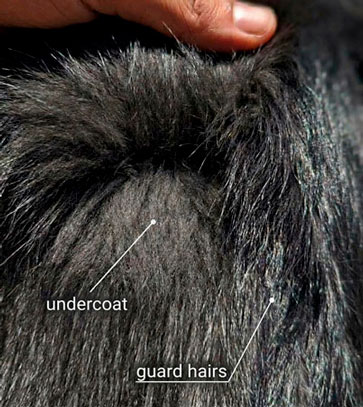
The Calupoh has a double coat, consisting of an outer coat and an undercoat.
- Outer coat: Medium-length hair with a slightly coarse texture.
- Undercoat: Softer and functioning as thermal insulation.
This coat structure serves an important purpose: it protects the dog from environmental conditions and helps it cope with different weather conditions, including cold, heat, and humidity.
Colors
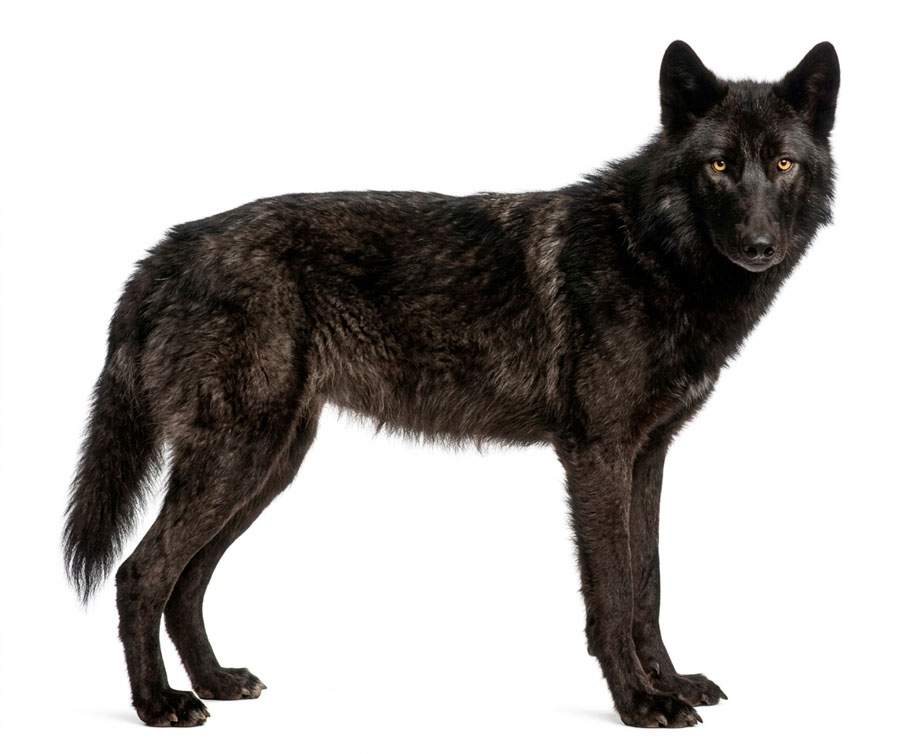
The preferred color is black or smoky black (smoke). In some adult dogs, the coat may develop silvery tones, a characteristic reminiscent of the coloration that wolves can display.
Black Calupoh
Smoke Calupoh
White-sable or complitely sable dogs may also be born. These colors are accepted by the standard, although they are not considered desirable or preferred colors.
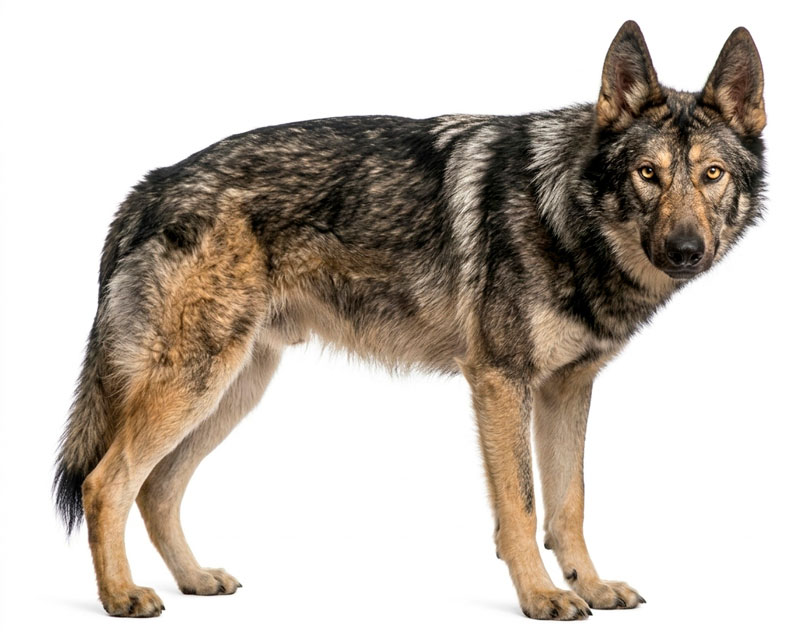
Sable Calupoh
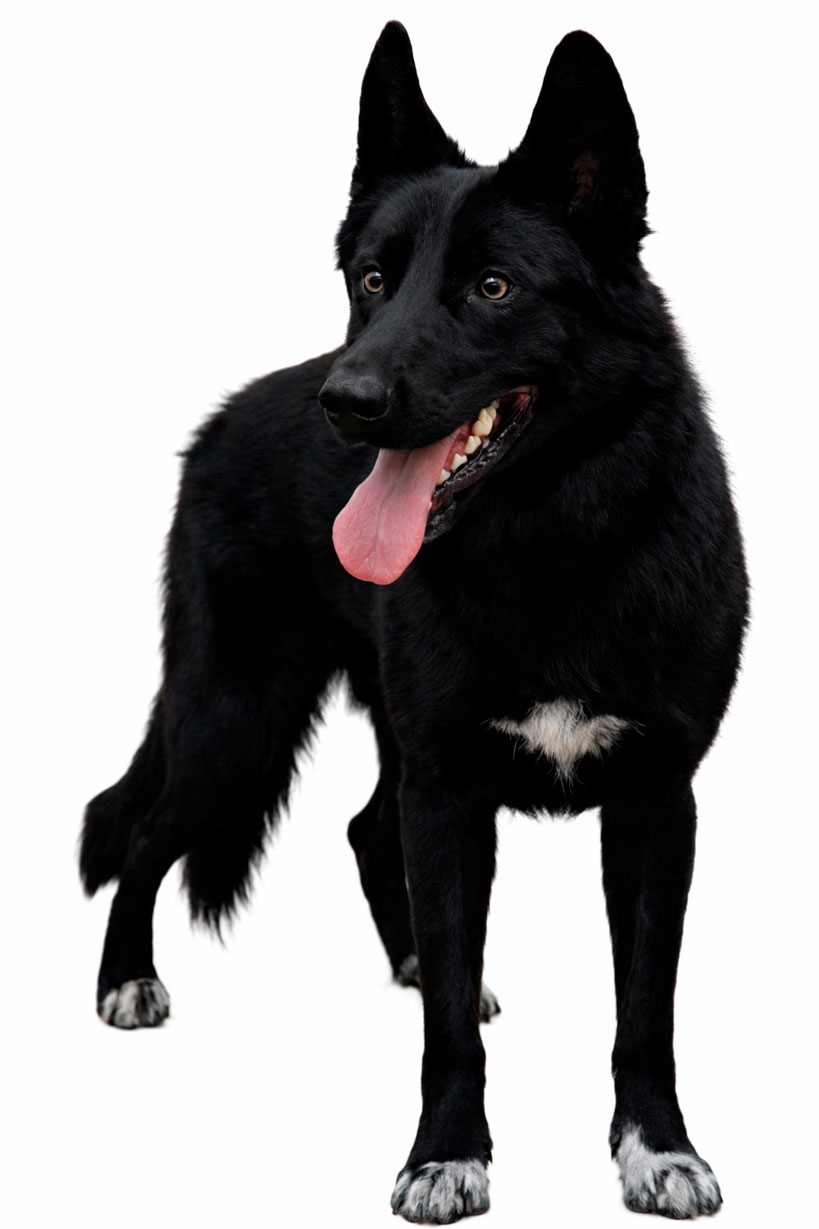
White markings are permitted on the chest and feet (toes), as well as brown-colored markings resembling “socks.” These markings should not appear on other parts of the body.
Size and Weight
The Calupoh’s height is measured at the withers, at the highest point of the back, approximately where the neck and shoulders meet.
- Males: 62 – 75 cm (24 – 29 in) at the withers.
- Females: 58 – 70 cm (22 – 27 in) at the withers.
Weight is not established by a specific number. Instead, it should be appropriately proportionate to the dog’s height and structure. A Calupoh should not have a weight that creates an obvious imbalance, whether due to excess weight or obesity, or insufficient weight that could negatively affect its physical condition or health.
Faults, Serious Faults, and Disqualifying Faults
The Calupoh breed standard establishes three levels of faults, depending on the significance of the characteristic that deviates from what is expected for the breed: faults, serious faults, and disqualifying faults.
This classification distinguishes between deviations from the defined physical, temperament, or structural characteristics that move a dog away from the ideal breed standard. These faults indicate that the dog does not fully meet the established standard and, depending on their severity, may result in penalties at dog shows and may prevent the dog from being used for breeding.
Faults
These are minor deviations that do not affect the dog’s functionality or health.
For the Calupoh, they include:
- Any deviation from the criteria mentioned above: This category includes any characteristic that does not correspond to what is established in the standard. It may involve a difference in structure, proportions, movement, coat, pigmentation, or another characteristic described above.
- Cow hocks: This is a structural deviation in which the hock joints angle inward toward each other while the feet point outward. It can cause instability while walking, an abnormal gait, a swaying movement, and rapid fatigue.
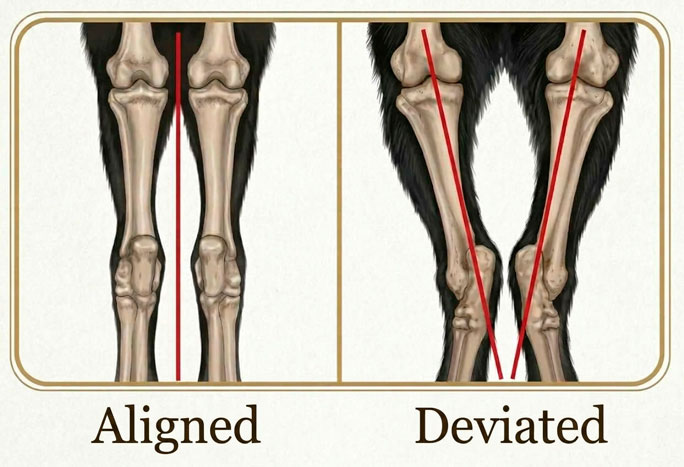
- Deviated limbs: These are limbs that do not maintain the expected alignment. Instead of appearing straight and correctly positioned, they may deviate inward or outward. Because limb structure directly influences the way a dog moves, these alterations can affect movement and balance.
- Coat out of condition: In dogs, a coat that is “out of condition” refers to hair that has lost its natural health, texture, shine, and functionality, becoming dull, brittle, greasy, or sparse. This is not merely an aesthetic issue and may often indicate health or nutritional problems, or inadequate grooming and maintenance.
- Lack of pigmentation in the lips or flews, or any fault involving a risk to the breed’s genetic health: The standard also includes in this category any characteristic that could represent a risk to the genetic health of the breed. This is important because the standard does not only describe the Calupoh’s appearance, but also considers characteristics related to maintaining a healthy population.
Serious Faults
These are deviations that affect the breed’s functionality, health, or typical appearance. These conditions affect the breed’s conformation.
The serious faults for the Calupoh are:
- Pink flews, lips, or eyelids.
- Cryptorchidism: This occurs when one or both testicles fail to descend. This characteristic is significant from both reproductive and veterinary perspectives.
- Missing teeth: This may indicate different health problems, genetic factors, or the consequences of accidents.
- A bite (occlusion) different from the recommended type: A different occlusion, (medically known as a dental malocclusion), indicates an abnormal alignment of the teeth or a discrepancy in the length of the dog’s jaws. This condition may indicate genetic, developmental, or traumatic problems.
Disqualifying Faults
These are characteristics that prevent a dog from being considered suitable for breeding or showing.
The disqualifying faults for the Calupoh are:
- Aggressiveness or extreme shyness: This means that the dog’s physical appearance is not the only factor evaluated; behavior is also part of the characteristics considered when assessing the breed.
It is important to distinguish these concepts from an isolated reaction. A dog may be cautious, reserved, nervous, or uncomfortable in an unfamiliar situation without this necessarily meaning extreme shyness. Likewise, a single response to a specific situation is not enough on its own to define a dog’s overall temperament. The standard refers to clearly manifested behavioral characteristics.
- Eyes of a color not mentioned in the standard: This characteristic should be distinguished from variations in shade that may occur within the same color range. What is evaluated is whether the color corresponds to one of the colors recognized by the standard.
- Physical or behavioral abnormalities must be disqualifying: This provision seeks to prevent clearly abnormal physical or behavioral characteristics from being considered part of the breed type. Therefore, evaluation is not limited to determining whether a dog has the characteristic appearance of a Calupoh; it also considers whether its conformation and behavior are compatible with a functional and healthy specimen.
This is done to protect the stability and health of the breed.
In Summary
The Calupoh breed standard is not intended to create a “perfect” dog, but rather to preserve the essence of the breed. These guidelines help maintain a balanced, healthy, and recognizable breed over time.
Knowing the breed standard allows us to look at the Calupoh beyond its striking appearance. Its wolf-like appearance is undoubtedly one of its most recognizable characteristics, but the breed is defined by a much broader set of elements: its proportions, body structure, movement, coat, head, size, and temperament.
Each of these characteristics plays a role within the whole. Its balanced structure and limbs should allow it to move efficiently; its double coat provides protection from the environment; its head, ears, and expression contribute to its distinctive appearance; and its temperament is part of what is expected of a stable, active dog that is closely bonded with its family.
The standard also reminds us that a Calupoh is not defined solely by its resemblance to a wolf. Its wolf-like appearance is part of its identity, but recognizing the breed means looking at the dog as a whole and understanding how its different characteristics relate to one another.
At the same time, no standard can completely describe an individual dog. Every Calupoh has its own personality, development, and natural variations. The standard establishes the characteristics that define the breed type, while each dog’s everyday life is also shaped by its individual genetics, socialization, training, experiences, and environment.
Understanding these characteristics allows us to appreciate the Calupoh from a more informed perspective and understand why this Mexican breed has an identity of its own one that goes far beyond its resemblance to a wolf.
Learn More About the Calupoh
If you are interested in learning more about the Calupoh, we invite you to explore the other articles on our website, where you can find information about:
- Its history.
- Its pre-Hispanic origins.
- Its recovery process.
Reference: Federación Canófila Mexicana