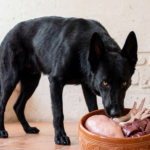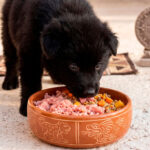
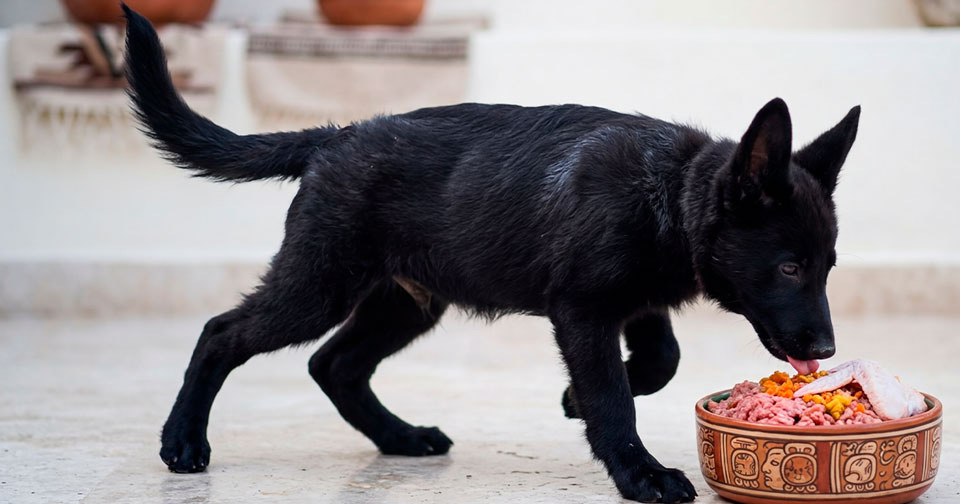
Now, at 3-month-old, your Calupoh puppy is no longer the same as it was 4 weeks ago.
It is still growing quickly, but now it has stronger teeth and a more stable digestive system. This means we can begin introducing new elements, always with care and observation.
In the previous article we talked about feeding a 2-month-old puppy and the importance of calcium in its development. If you did not read that article, here is a brief summary of the essential points: at this stage, nutrition continues to focus on protecting bone development and maintaining a high intake of animal protein.
The foundation remains:
However, when the puppy already consumes between 1 kg and 1.5 kg per day (which usually approaches the amount it will eat as an adult), this rule begins to be adjusted according to body condition and activity level.
Soft meat bones
At 3 months old, puppies can begin chewing soft meaty bones, such as raw chicken wings.
These bones are thin and flexible, which makes them safer than denser bones. They also provide natural calcium and support dental development.
They should always be offered raw under supervision.
Gradual introduction of ground beef and organ meats
Another important change at 3 months is the introduction of ground beef and organ meats. This step should always be one gradually and in small amounts.
Organ meats are not an “extra”; they are part of a complete diet. To begin introducing organs, we will start with liver and heart.
Liver:
Liver is a concentrated source of iron, vitamins (especially vitamin A), and minerals. If the puppy shows stomach sensitivity, beef liver is often better tolerated than chicken liver. It is recommended to begin with very small amounts, for example around 5% of the total daily protein, and carefully observe the puppy´s digestive response.
Heart:
Heart is usually better tolerated than liver and can be incorporated in small portions from the beginning. It is rich in high-quality protein, amino acid, and iron.
The total amount of organ meats (liver, heart, or others) should not exceed 10% to 15% of the total diet. More is not better in this case, it creates imbalance. It is also not recommended to always offer the same type of organ meat. Ideally, they should be alternated.
Organ meats are best offered raw, as this helps preserve their nutritional properties. However:
When introducing ground beef, being by mixing a small portion, for example 10% of the total protein, together with the usual chicken. Observe the puppy for 24 to 48 hours, paying attention to stool consistency and its general condition. If everything goes well, the amount can be gradually increased.
If during the transition you notice very soft stool or diarrhea:
No todos los cachorros reaccionan igual a los cambios, y eso es completamente normal. El objetivo no es acelerar el proceso, sino permitir que el sistema digestivo se adapte correctamente.
La cocción ayuda a eliminar las bacterias y facilitar la digestión mientras el intestino se regula. Una vez estabilizado, puedes retomar la transición poco a poco o, si lo consideras necesario mantener los alimentos ligeramente cocidos.
How to make the transition properly
Do not introduce ground beef, new bones, and organ meats on the same day. Too many changes at once make it difficult to identify the cause of any reaction.
At this stage, the Calupoh puppy can begin receiving a more complete and varied diet, but always through progression, not saturation.
It is not about adding everything, but about adding the right foods at the right time.
And if you have any specific or medical concerns, always consult your veterinarian.
Raw or cooked meat: An important reminder
The digestive system of Calupoh puppies is prepared to digest raw meat. However, it is recommended to heat the meat in the microwave for at least 5 minutes to reduce bacterial load. The decision depends on the hygiene and quality of the meat. If you are not certain about its sanitary quality, it is preferable to cook it lightly or fully.
When choosing between raw or cooked meat, consider the following:
Another important factor is the fat content of the meat. If the meat contains too much fat, diarrhea may occur, so part of the fat should be removed.
Can they continue eating kibble (Dry food)?
Yes. Following the same recommendations give for 2-month-old puppies. Which are:
Kibble can be included in a Calupoh´s diet. Ideally, it should be high in animal protein and low in grains. In some cases, puppies may require a slightly larger portion than amount suggested by the manufacturer.
When formulate kibble can provide nutrients that may not always be perfectly balanced in a poorly planned homemade diet. However, it is important to understand something:
Kibble does not replace meat,it can work as a complement, but not as a substitute.
Another important point is that kibble and meat should not be mixed in the same meal, because they have different digestion times and may cause digestive issues. They should be offered at different feeding times.
A practical advantage of getting your puppy used to kibble is that it makes travel or situations where fresh food cannot be prepared much easier.
3 Basic natural recipes for 3-month-old Calupoh puppies
En el siguiente apartado encontrarás recetas específicas para esta etapa, donde comenzamos a incluir huesos carnosos blandos, carne molida de res y vísceras.
But first, let´s look at an example of how to calculate portions.
If your puppy weighs 12 kg:
Of which:
To introduce ground beef and chicken wings:
With that explained, let´s begin.
Recipe 1: Chicken with raw wing and carrot
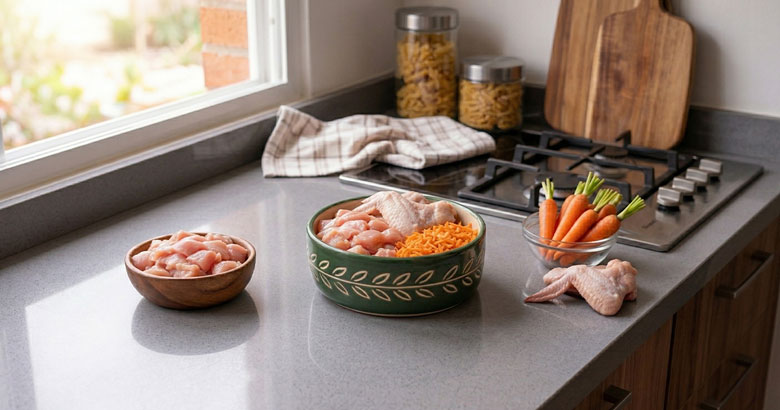
Ingredients:
- Raw boneless chicken
- Raw chicken wings with thin, flexible bone (no feathers)
- Peeled and cooked carrot
Preparation:
- Wash and peel the carrot.
- Cook the carrot in water without salt or seasoning until soft.
- Mash or cut vegetables into small pieces.
- Cut the chicken into small pieces.
- Serve the carrot, chicken, and wings, always under supervision.
Recipe 2: Ground beef, chicken and peas
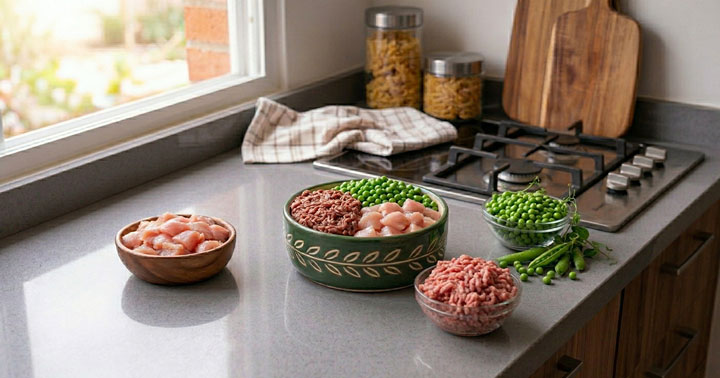
We will gradually introduce ground beef, following the portions explained earlier.
Ingredients:
- Raw boneless chicken
- Ground beef
- Cooked peas
Preparation:
- Cook the peas in water without salt or seasoning until soft.
- Cut the chicken into small pieces.
- Serve the peas, ground beef, and chicken.
Recipe 3: Chicken, liver, carrot and peas
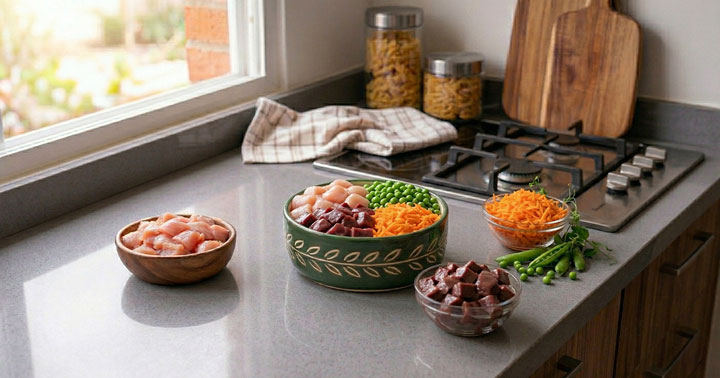
Ingredients:
- Raw boneless chicken
- Beef liver
- Cooked peas
- Peeled and cooked carrot
Preparation:
- Wash and peel the carrot.
- Cook the vegetables in water without salt or seasoning until soft.
- Mash or cut the carrot into small pieces.
- Cut the chicken and beef liver into small pieces.
- Serve the vegetables, chicken, and liver.
If you would like to learn more about:
We invite you to explore more articles in our Blog and continue discovering specialized content about the care and development of the Calupoh.
Now we would love to hear from you.
Share your experience or leave your questions in the comments.